What an IPTV Subscription Actually Includes
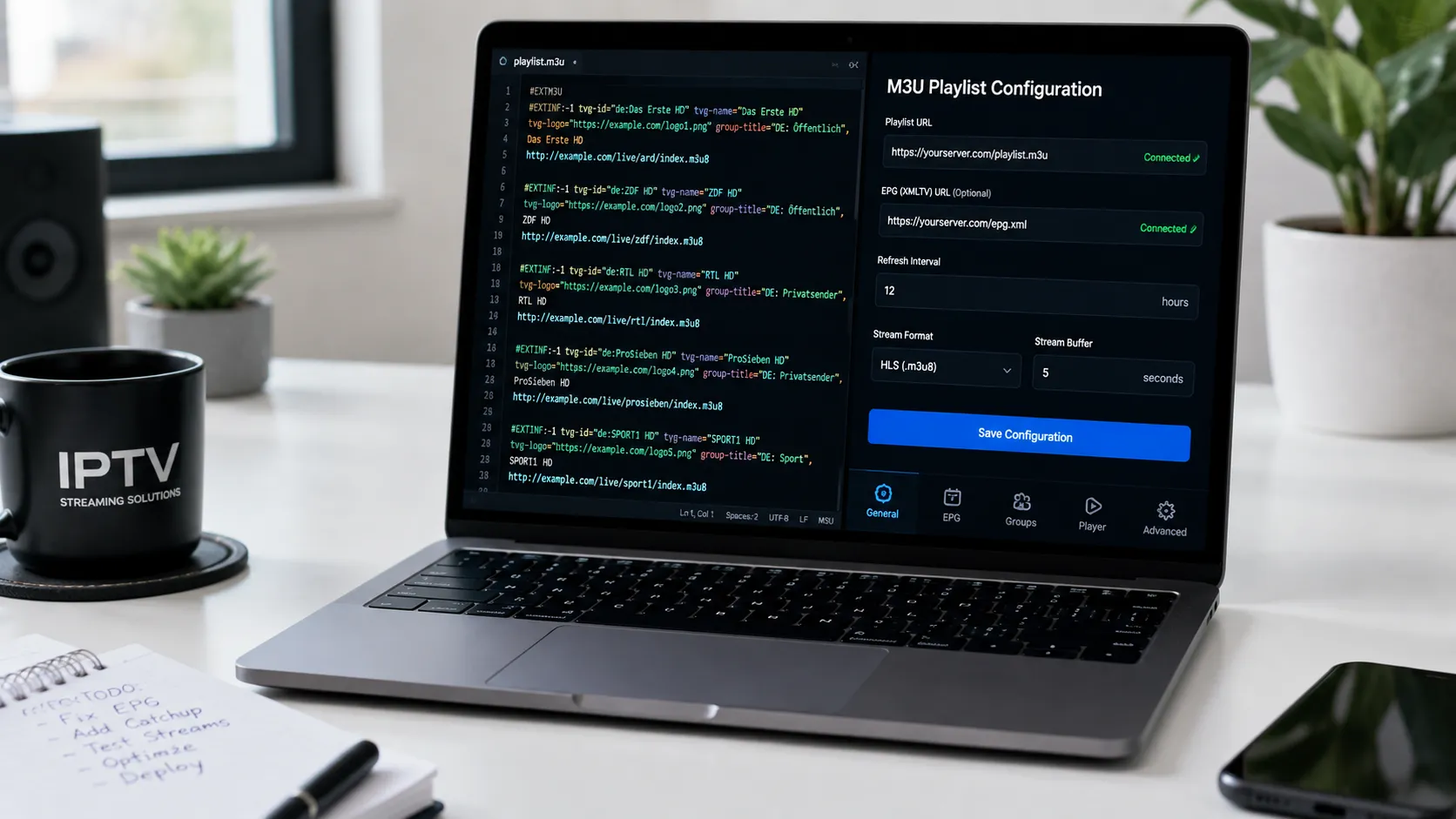
When you subscribe to an IPTV service, you receive access credentials — typically an M3U playlist URL or a set of Xtream Codes login details (server address, username, password). These credentials are entered into a compatible IPTV player app on your device, which uses them to load your channel list, EPG guide, and video-on-demand library.
What those credentials unlock depends entirely on the provider and the plan tier you choose. At the basic level, a subscription provides access to a curated list of live TV channels. More complete offerings add a full Electronic Programme Guide, a VOD library of films and series, catch-up functionality for recently aired content, and multi-screen support across simultaneous connections.
It is worth being specific about what you expect from a subscription before choosing a plan. A household that primarily wants live sport and a functional EPG has different requirements from one that wants an extensive film library and catch-up TV. Understanding the content priorities of everyone in your household helps you match a plan to actual usage rather than paying for features that go unused.
An IPTV subscription gives you access credentials to use inside a player app — it does not include the player itself. You will need to separately install a compatible IPTV player such as IPTV Smarters Pro or TiviMate. Our IPTV player apps guide covers the best options for every device.
Monthly vs Quarterly vs Annual: Which Plan Length Makes Sense?
IPTV subscriptions are commonly offered across four time periods — monthly, quarterly (3 months), semi-annual (6 months), and annual (12 months). The pricing difference between these tiers is significant, and understanding the trade-offs helps you make a financially sound decision.
Monthly subscriptions
Monthly plans carry the highest per-month cost but provide maximum flexibility. They are the right choice when you are trying a provider for the first time, when you are not yet confident about long-term quality, or when you have a genuinely seasonal need — for example, subscribing only during a major sports season. Starting monthly lets you verify that the service delivers what it promises before committing financially to a longer period.
Quarterly subscriptions
Three-month plans represent a middle ground — meaningfully cheaper than rolling monthly subscriptions while still giving you a relatively short commitment window. They suit subscribers who have completed a satisfactory trial period and want to continue at a lower rate without the full commitment of an annual plan.
Annual subscriptions
Annual plans deliver the best per-month value — typically 30 to 50 percent less than equivalent monthly pricing. They make sense once you have built confidence in a provider through at least one or two months of real-world daily use. An annual plan on a provider you trust is consistently the best value decision; an annual plan on an unknown provider that turns out to be unreliable is money lost.
| Plan Length | Relative Cost | Flexibility | Best For |
|---|---|---|---|
| Monthly | Highest per month | Cancel anytime | First-time trial, seasonal viewers |
| Quarterly (3 months) | Moderate saving | Medium commitment | Post-trial consolidation |
| Semi-annual (6 months) | Good saving | Moderate commitment | Established subscribers |
| Annual (12 months) | Best per-month value | Lowest flexibility | Proven provider, regular viewers |
Single vs Multi-Connection Subscriptions
One of the most practically important decisions when choosing an IPTV subscription is the number of simultaneous connections included. This refers to how many streams can run at the same time under a single account.
A single-connection subscription means only one device can stream at a time. This is perfectly adequate for a solo viewer or a household where everyone watches together. The moment two people want to watch different content at the same time — different rooms, different devices — a single connection becomes a bottleneck.
Multi-connection plans resolve this directly. A two-connection plan allows two simultaneous streams; a three-connection plan allows three. The credentials can be installed on any number of devices — the limit applies only to how many can actively stream at the same moment, not to how many devices have the app installed and configured.
When evaluating multi-connection pricing, look at the per-connection cost rather than the headline plan price. A two-connection plan at a moderate uplift over a single-connection plan often represents excellent value relative to subscribing twice separately.
What to Look For in a Quality IPTV Subscription
- Channel lineup matched to your market. Verify that the channels you actually watch are present — not just promised. For US viewers, check the major networks and sports packages. For UK viewers, verify Premier League and key terrestrial channels.
- Complete EPG coverage. A subscription with incomplete or missing EPG data is considerably harder to use as a television replacement. Ask the provider specifically about EPG completeness for your key channels.
- Clear renewal terms. Understand exactly when your subscription expires, how renewal is handled, and whether pricing changes on renewal. Reputable providers are transparent about this.
- Player app compatibility. Confirm the subscription credentials (M3U or Xtream Codes) are compatible with the IPTV player app you intend to use on your primary device.
- Responsive support included. Support should be accessible — not buried. Fast WhatsApp or live chat support is the most practical form of IPTV service support, particularly for initial setup assistance.
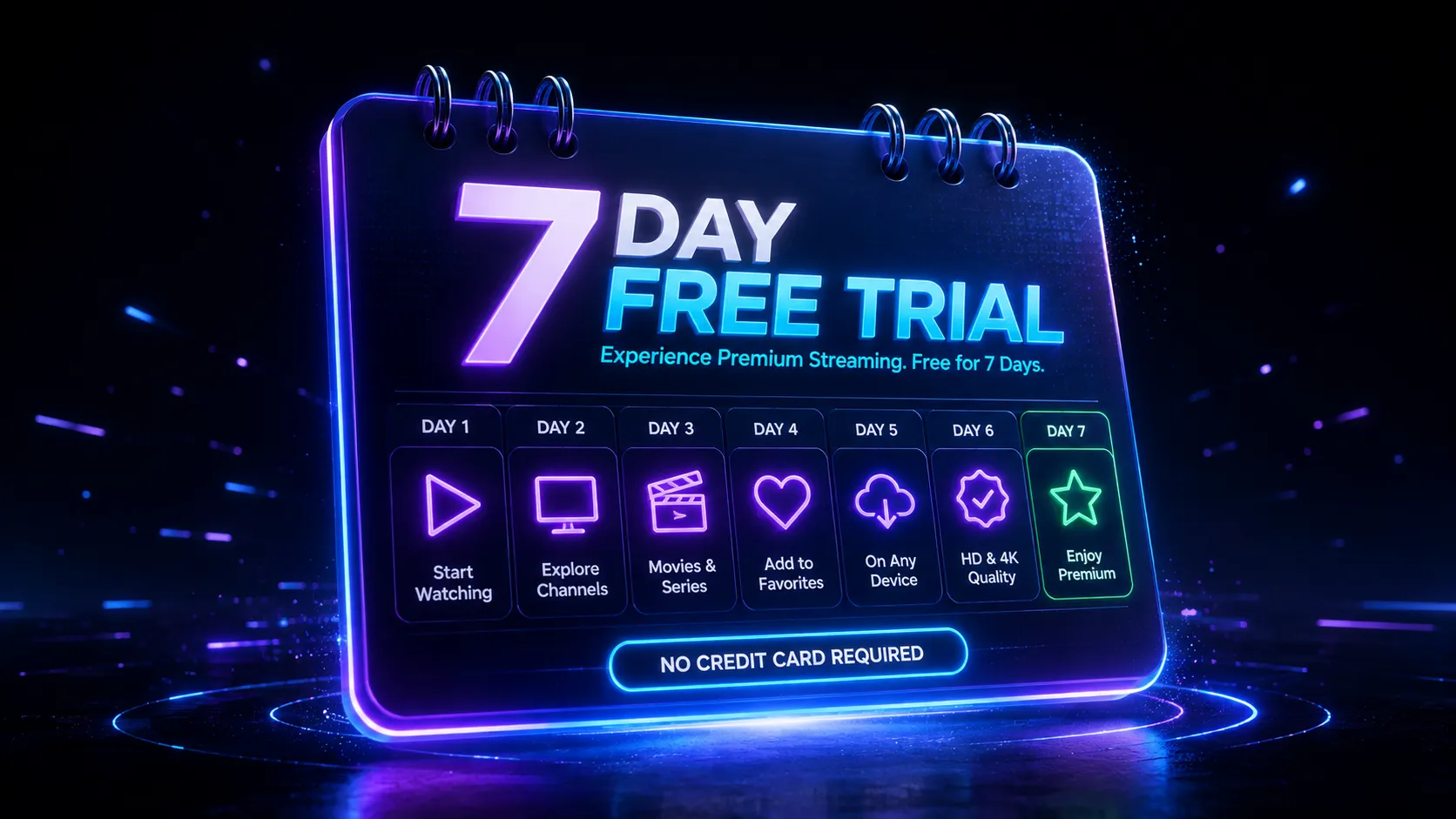
- Free trial availability. A provider confident in their quality offers a trial period. This is the single most important quality signal available before subscribing — use it systematically as described in our free trial guide.